
 Subscribe
TBILISI, GEORGIA — November 2025 — The Walter Reed Army Institute of Research Europe–Middle East (WRAIR-EME), Georgian Defense Forces (GDF), and Ministry of Internal Affairs–Border Police (MIA-BP) completed a joint AMR–vector surveillance training program from 10–14 November, advancing regional biosurveillance capabilities and military readiness.
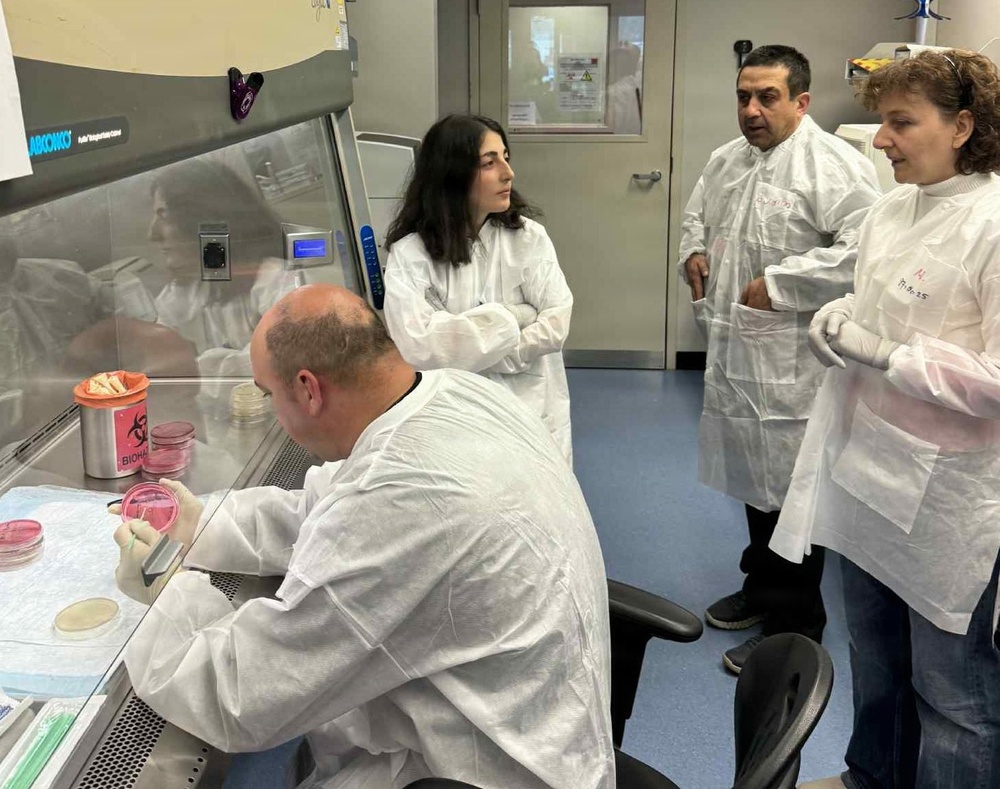
Held at WRAIR-EME’s Bacteriology and Entomology Laboratories, the training brought together study leads, laboratory specialists, veterinary officers, and Military Working Dog (MWD) handlers. The program focused on identifying ESKAPE pathogens (E. faecium, S. aureus, K. pneumoniae, A. baumannii, P. aeruginosa, and Enterobacter spp.) and collecting and identifying ticks from MWDs and service dogs.
Participants received integrated instruction combining classroom sessions with hands-on laboratory practice. Modules covered bacteriology workflows for pathogen isolation, AMR detection, interpretation of multidrug-resistant profiles, and entomological training on tick ecology, collection, and species identification. These skills are essential to strengthening sample collection accuracy, diagnostic quality, and early detection of MDR pathogens and vector-borne threats.
Because MWDs operate in high-exposure environments, improved biosurveillance directly enhances operational readiness, canine health, handler safety, and public health. The training also reinforced collaboration among WRAIR-EME, GDF, and MIA-BP, equipping Georgian partners with the expertise needed to contribute to a comprehensive AMR–vector surveillance network.
The event initiated a new strategic direction for WRAIR-EME by integrating AMR and vector surveillance efforts supporting Georgia’s MWD program. Discussions generated several new collaborative ideas, including expanded vector research in border regions—critical areas for both force health protection and national security.
This joint training marks a significant step in strengthening U.S.–Georgia scientific cooperation, improving biological threat detection, and expanding WRAIR-EME’s role as a regional leader in AMR and vector surveillance.
| Date Taken: | 11.11.2025 |
| Date Posted: | 12.02.2025 19:37 |
| Photo ID: | 9410811 |
| VIRIN: | 251112-A-A1902-1002 |
| Resolution: | 1453x1146 |
| Size: | 388.92 KB |
| Location: | GE |
| Web Views: | 29 |
| Downloads: | 3 |

This work, Joint AMR–Vector Surveillance Training Strengthens U.S.–Georgia Partnership [Image 5 of 5], by CPT Daniel Kankam, identified by DVIDS, must comply with the restrictions shown on https://www.dvidshub.net/about/copyright.


No keywords found.




