|
|
Missile Defense Agency
Content Online (MDA)
Videos: 8
Audio: 0
News Stories: 0
Images: 3
Publications: 0
0 Followers
Hometown: Washington DC US
Current Personnel:
Richard Lehner
Chris Taylor
Ben Listerman
Unit Mda
For more content from this unit, please contact Josh Vierela | jvierela@dvidshub.net | 678-421-6832 |
|
|
Search for more MDA Content
|
|
|
| |
Recent Video MDA Flight Test Video
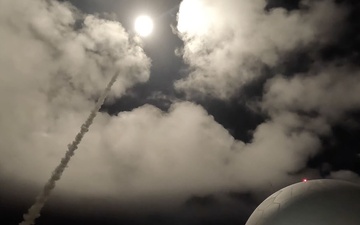
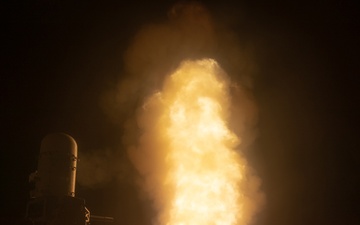
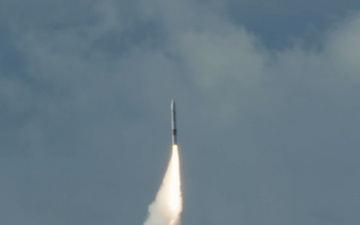
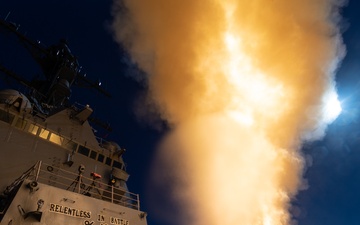
B-roll of the launch of an SM-3 from USS O'Kane and ballistic missile target launch from Kwajalein Atoll and it's intercept. Sea-based Missile Defense Flight Test Results in Successful Intercept.
The Missile Defense Agency (MDA), U.S. Navy sailors aboard the Aegis destroyer USS O'KANE (DDG 77), and Soldiers from the 94th Army Air and Missile Defense Command operating from the 613th Air and Space Operations Center at Hickam Air Force Base, Hawaii, successfully conducted a flight test of the Aegis Ballistic Missile Defense (BMD) element of the nation's Ballistic Missile Defense System, resulting in the intercept of a separating ballistic missile target over the Pacific Ocean. This successful test demonstrated the capability of the first phase of the European Phased Adaptive Approach (EPAA) announced by the President in September, 2009.
At 2:52 a.m. EDT (6:52 p.m. April 15 Marshall Island Time), an intermediate-range ballistic missile target was launched from the Reagan Test Site, located on Kwajalein Atoll in the Republic of the Marshall Islands, approximately 2,300 miles southwest of Hawaii. The target flew in a northeasterly direction towards a broad ocean area in the Pacific Ocean. Following target launch, a forward-based AN/TPY-2 X-band transportable radar, located on Wake Island, detected and tracked the threat missile. The radar sent trajectory information to the Command, Control, Battle Management, and Communications (C2BMC) system, which processed and transmitted remote target data to the USS O'KANE. The destroyer, located to the west of Hawaii, used the data to develop a fire control solution and launch the SM-3 Block IA missile approximately 11 minutes after the target was launched.
As the IRBM target continued along its trajectory, the firing ship's AN/SPY-1 radar detected and acquired the ballistic missile target. The firing ship's Aegis BMD weapon system uplinked target track information to the SM-3 Block IA missile. The SM-3 maneuvered to a point in space as designated by the fire control solution and released its kinetic warhead. The kinetic warhead acquired the target, diverted into its path, and, using only force of a direct impact, destroyed the threat in a "hit-to-kill" intercept.
During the test the C2BMC system, operated by Soldiers from the 94th Army Air and Missile Defense Command, received data from all assets and provided situational awareness of the engagement to U.S. Pacific Command, U.S. Northern Command and U.S. Strategic Command.
The two demonstration Space Tracking and Surveillance Satellites (STSS), launched by MDA in 2009, successfully acquired the target missile, providing stereo "birth to death" tracking of the target.
Today's event, designated Flight Test Standard Missile-15 (FTM-15), was the most challenging test to date, as it was the first Aegis BMD version 3.6.1 intercept against an intermediate-range target (range 1,864 to 3,418 miles) and the first Aegis BMD 3.6.1 engagement relying on remote tracking data. The ability to use remote radar data to engage a threat ballistic missile greatly increases the battle space and defended area of the SM-3 missile.
Initial indications are that all components performed as designed. Program officials will spend the next several months conducting an extensive assessment and evaluation of system performance based upon telemetry and other data obtained during the test.
FTM-15 is the 21st successful intercept, in 25 attempts, for the Aegis BMD program since flight testing began in 2002. Across all BMDS elements, this is the 45th successful hit-to-kill intercept in 58 flight tests since 2001.
Aegis BMD is the sea-based midcourse component of the MDA's Ballistic Missile Defense System and is designed to intercept and destroy short to intermediate-range ballistic missile threats. MDA and the U.S. Navy cooperatively manage the Aegis BMD Program.
Taken: 04.15.2011
Missile Defense Agency Japan Flight Test-4 Video
B-roll of missile launches. Scenes include missiles launched from sea, land and air and missile defensive interceptions. SM-3 Launches from JS Kirishima (DDG 174), Separating Medium -Range Ballistic Missile Target Launch from PMRF, Kauai. Intercept (As seen from infared seeker and support plane) and JS Kirishima (DDG 174). There is no audio.
Taken: 10.28.2010
THAAD System Intercepts Target in Successful Missile Defense Flight Test
The Missile Defense Agency and U.S. Army soldiers of the 6th Air Defense Artillery Brigade from Fort Bliss, Texas, successfully conducted an intercept test for the Terminal High Altitude Area Defense (THAAD) missile defense element of the nation’s Ballistic Missile Defense System today. A target missile was launched at approximately 9:32 p.m. Hawaii time (3:32 a.m. EDT, 29 June) , and about five minutes later a THAAD interceptor missile was launched from the Pacific Missile Range Facility (PMRF) off the island of Kauai, Hawaii. Preliminary indications are that planned flight test objectives were achieved.
The test involved the intercept of a short-range unitary target in the endoatmosphere (inside the earth’s atmosphere). The target, representing a short-range ballistic missile threat, was launched from an at-sea mobile launch platform located in the Pacific Ocean west of Hawaii. Upon acquiring and tracking the target, the THAAD system developed a fire control solution and launched an interceptor missile, which acquired and successfully intercepted the target missile. The intercept occurred at the lowest altitude to date for the THAAD interceptor missile, which has the capability to engage targets both inside and outside the earth’s atmosphere.
Soldiers of the 6th Air Defense Artillery Brigade from Fort Bliss, Texas, conducted launcher, fire control and radar operations, using tactics, techniques, and procedures developed by the U.S. Army Air Defense School. Soldiers operating the equipment were not aware of actual target launch time. Also following the engagement, test personnel used the Simulation-Over-Live Driver (SOLD) software system to inject multiple simulated threat scenarios into the THAAD radar. This exercised THAAD’s capability to track and engage a mass raid of enemy ballistic missiles.
Several missile defense assets and emerging technologies observed the launch and gathered data for future analysis. Participants included the Command and Control, Battle Management and Communications (C2BMC) system and elements of the U.S. Army’s PATRIOT system. The PATRIOT system, located at PMRF, conducted engagement coordination with THAAD and conducted upper tier debris mitigation exercises during the intercept engagement.
This was the seventh successful intercept in seven attempts for the operationally-configured THAAD system. Operational elements of the Ballistic Missile Defense System are currently deployed, protecting the nation, our allies and friends against limited ballistic missile attack. The system continues to undergo development and testing to provide a robust layered defense against ballistic missiles of all ranges in all phases of flight.
The THAAD Program is managed by the Missile Defense Agency in Washington, D.C., and executed by the THAAD Project Office in Huntsville, Ala.
Taken: 06.28.2010
BVT-01 Flight Test - Media Release
B-roll of a 2-stage, ground-based Interceptor launch. Scenes include shots of a rocket being launched from two different angles at Vandenberg Air Force Base, Calif.
Taken: 06.06.2010
Airborne Laser Testbed Experiment
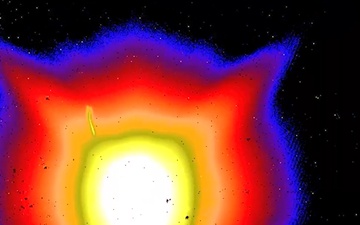
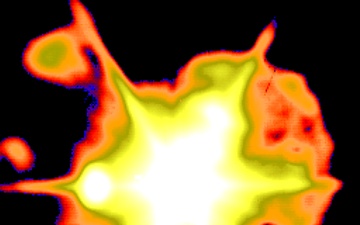
B-roll of various tests for an airborne laser testbed experiment. Scenes include heat signature of the missile, FMA engagement cockpit view and stock footage of the aircraft taking off, aerial footage while flying through the clouds and landing of the aircraft.
Taken: 02.11.2010
...more video from MDA |
| |
|