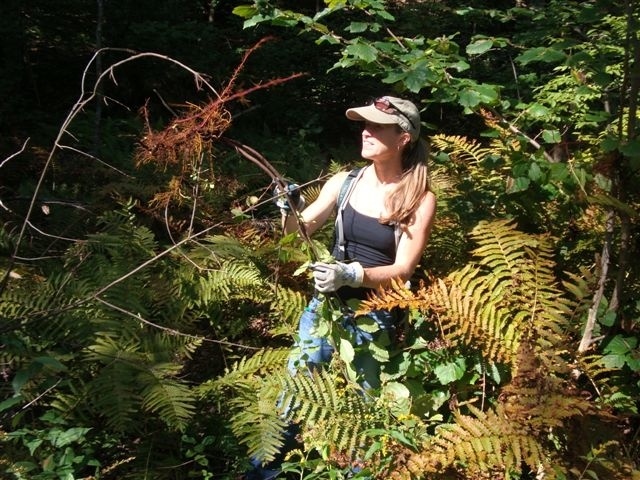
PETERBOROUGH, N.H. -- This past fall, nearly 20 employees from Eastern Mountain Sports gathered at the New England District’s Edward MacDowell Project in Peterborough, N.H., as part of the company’s Volunteer Service Day – a program that the company created to encourage their employees to give back and volunteer their time on outdoor projects that benefit their local community.
This year’s focus, and in years past, was on the removal of invasive plants such as European Glossy Buckthorn, Oriental Bittersweet, Autumn Olive and Japanese Knotweed. Park Rangers began the day by informing the volunteers of the havoc invasive plant species have on the natural resources of the project. There are more than 11 invasive plants adversely impacting the natural habitats and their functions at Edward MacDowell Lake.
The rangers also pointed out that without the help of volunteers and efforts like Volunteer Service Day parks and outdoor recreational experiences will continue to suffer and the ability to combat this epidemic looks grim.
Edward MacDowell Lake Park Manager Jason Tremblay informed the group that the spread of invasive species are posing major obstacles to the management of the project’s natural resources and recreational opportunities.
Each year, Tremblay said, the project spends approximately 10 percent of its contractual budget on the control and management of invasive species.
“The Corps of Engineers works closely with other state and federal agencies to combat the spread and control of invasives, but with increasing demands and diminishing budgets, contributions from volunteers are invaluable,” Tremblay said.
Many of the volunteers cited personal reasons for coming to the event. “I love the outdoors and want to see it protected,” said Susan Valez of EMS. “This is my backyard.”
The rangers instructed the volunteers on the identification, treatment and proper disposal of the invasive plants they were going to encounter.
The publication “Guidelines for Disposal of Terrestrial Invasive Plants” from the University of Connecticut, that Marty Curran the New England District's representative on the Invasive Species Leadership Team, was made available to the volunteers and proved extremely helpful.
Rangers also provided the group with colored printouts for identification from the National Resource Conservation Service. Some of the unique safety issues of working with invasive plants and the hand tools needed for their removal were also demonstrated. Treatment during the fall dramatically increases the effectiveness of herbicide on these plants, as the plants are starting to store nutrients for the coming winter, naturally drawing the herbicide into their root system.
The volunteers were then broken up into teams and armed with loppers, roundup and protective gear. In one day, the volunteers treated or removed all of the invasive plants on nearly 5 acres and along 3.5 miles of trails at the project.
The work was hard, but enjoyable for the volunteers. As they worked, calls of “Go Buckthorn Slayers!” in reference to the destruction of one of the invasive plants could be heard on occasion.
The monetary contribution of the volunteer effort was estimated at $3,000, and a direct cost savings from the project’s invasive control management budget of nearly $4,000. More importantly, however, are the experiences of working with a volunteer group and the spirit of community involvement created by this bond between the volunteers and the Army Corps of Engineers.
(Story by Joshua Levesque, Park Ranger, U.S. Army Corps of Engineers, New England District)
| Date Taken: |
09.13.2011 |
| Date Posted: |
01.03.2012 11:57 |
| Story ID: |
81994 |
| Location: |
PETERBOROUGH, NEW HAMPSHIRE, US |
| Web Views: |
84 |
| Downloads: |
0 |
PUBLIC DOMAIN

This work, Volunteers reverse some adverse impacts by invasive plants at Edward MacDowell Lake, must comply with the restrictions shown on https://www.dvidshub.net/about/copyright.